








Hello!

I’m Yashwant Dubbaka

A rising senior at the University of Michigan, exploring new-grad opportunities in the silicon industry.

Yashwant Dubbaka, Design Verification Engineer
01020304050nsclkdual degreeschoolB.S.E.B.B.A.gradcitizenUniversity of Michigan, Ann ArborComputer EngineeringBusiness AdministrationMay 2027US Citizen
yash_dubbaka.vcd · 0–50 nsall signals valid
01 — About

Background

I care about the part of chip design where you prove something actually works. That means constrained-random environments that find the bugs a directed test would miss, assertions that pin down control-path intent, and formal proofs for the properties that have to hold every cycle — then mining coverage until there is nothing left unexplained but documented waivers.

I work across the stack rather than at one layer of it: a UVM environment for security IP at Qualcomm, a torus NoC characterized across 156 simulations, and a 16-bit RISC-V processor carried from schematic to DRC/LVS-clean layout. The dual degree in business is deliberate — verification is ultimately a schedule-and-risk problem, and it helps to think about it that way.

Relevant coursework

  • VLSI Design
  • Computer Architecture
  • Integrated Circuits
  • Machine Learning
  • Networking Systems
  • Digital Design
  • Computer Organization
  • Signals and Systems
  • Data Structures and Algorithms

Outside the lab

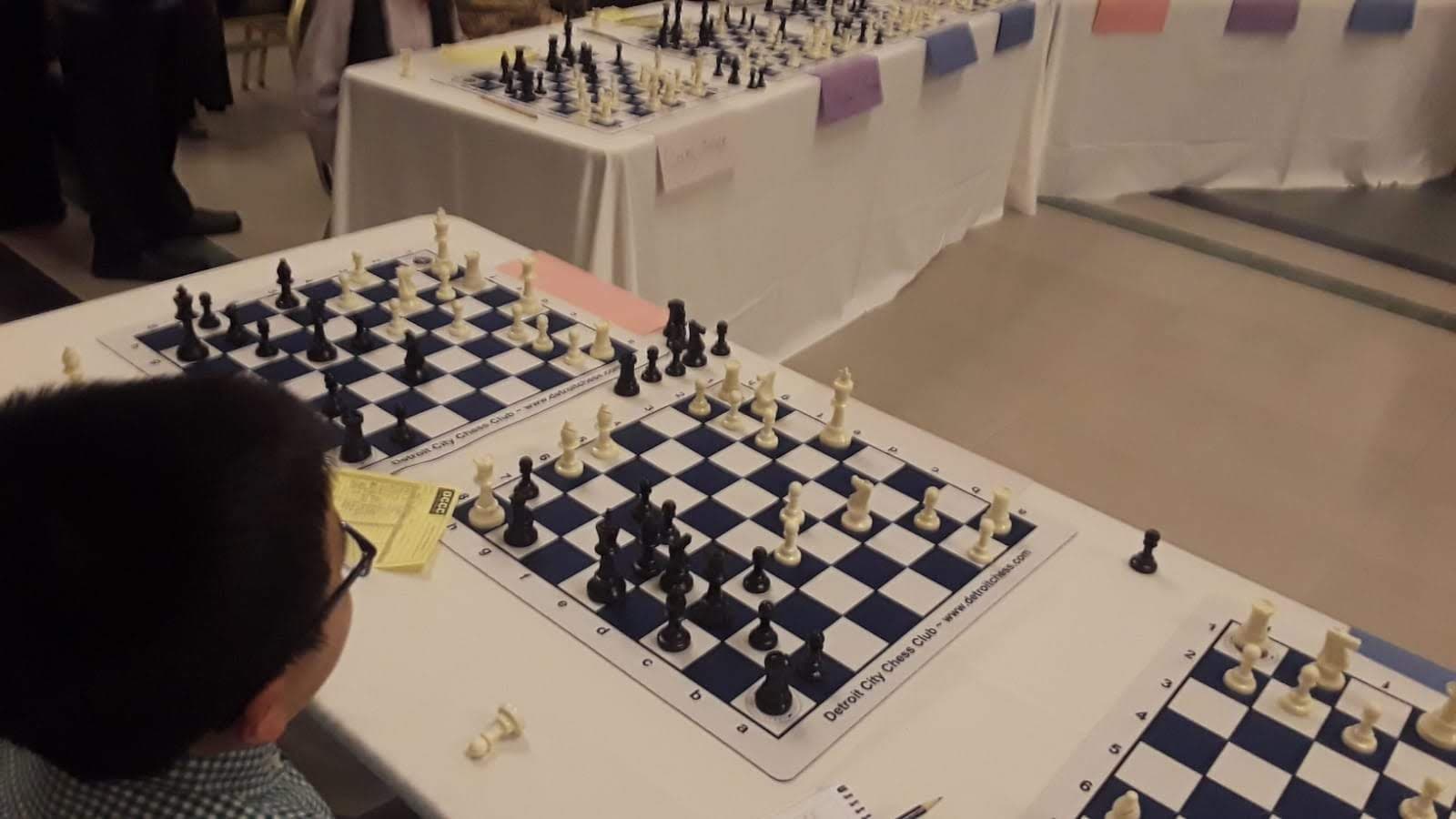
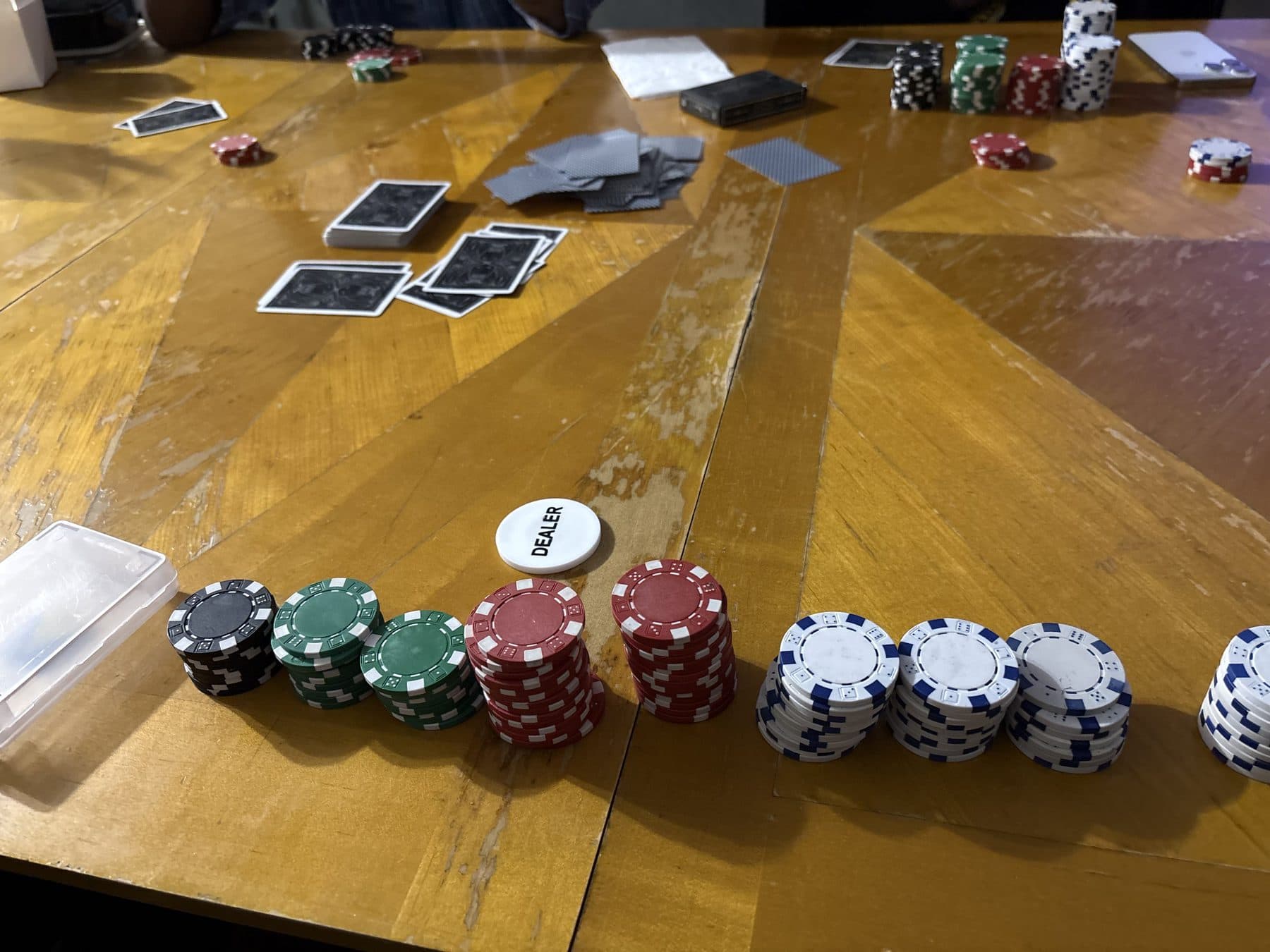
10-year-old me at one of many chess tournaments!Golden hour on the coast.I've been waiting years for a Pistons championship and will unfortunately keep waiting.A rare clear evening over the bridge.Coaster day with the crew.Love home games with my friends for as many hours as we can.The whole Bay from the summit.Started watching football 3 years ago and I've been addicted to fantasy leagues since.Iced coffee, non-negotiable.Alpine water, granite, and no cell service.
Chess
10-year-old me at one of many chess tournaments!

Education

  • B.S.E. Computer Engineering & B.B.A. (Dual Degree), Minor in Mathematics

    University of Michigan, Ann Arbor

    2023May 2027

02 — Skills

Tools I reach for

Verification

  • UVM
  • SVA
  • Constrained-random stimulus
  • Functional coverage
  • Formal property verification
  • RAL

Languages & Libraries

  • SystemVerilog
  • Verilog
  • Python
  • C/C++
  • TCL
  • Bash

Tools

  • Verdi
  • VCS
  • JasperGold
  • ChipStack
  • Claude Code
  • QuestaSim
  • CocoTB
  • Make
  • Linux/LSF

Protocols

  • DDR4/DFI
  • AMBA AHB
  • On-chip interconnect (NoC)

Custom Design

  • Cadence Virtuoso
  • Spectre
  • Calibre DRC/LVS
  • ADE
03 — Work

Where I've worked

  1. May 2026Aug 2026

    Design Verification Engineer Intern · Qualcomm

    Santa Clara, CA

    Owned verification of an authentication IP from raw RTL through SoC integration sign-off.

    • Architected a UVM environment for authentication IP from raw RTL, applying ChipStack agentic generation to boilerplate, and reached regression sign-off for SoC integration in 5 weeks against the team's 15-week manual estimate.
    • Authored a verification test plan spanning 14 features and 120+ sub-features of the security architecture, driving an 80+ test suite covering negative stimulus and illegal-access scenarios.
    • Closed code and functional coverage by mining regressions for uncovered bins and writing targeted constrained-random sequences, eliminating every coverage hole except documented waivers for unreachable logic.
    • Developed 40+ SystemVerilog assertions for control-path behavior and verified AHB protocol compliance with Cadence ABVIP, debugging JasperGold counterexamples until each targeted property reached full proof.
    • Owned the bug closure loop with design teams by isolating regression failure signatures to specific RTL logic and filing reproducible testcases, re-qualifying every RTL drop within 48 hours to hold the verification schedule.
    • UVM
    • SystemVerilog
    • JasperGold
    • ChipStack
    • AHB
  2. Jun 2025Aug 2025

    Software Engineer Intern · Deloitte

    Detroit, MI

    • Built a Python ETL pipeline processing 50,000+ threat intelligence records, cutting processing time roughly 60% by replacing row-wise lookups with parameterized SQL existence checks.
    • Python
    • SQL
    • ETL
04 — Projects

Selected work

Torus 4×4 Mesh NoC

Jun 2026 — Present

A 16-router bidirectional torus network-on-chip, verified for deadlock freedom and characterized across 156 simulations to find its saturation point.

  • Designed a 16-router bidirectional torus NoC in SystemVerilog with deterministic routing, 2 virtual channels, and dateline deadlock avoidance, verifying freedom from deadlock across all traffic patterns.
  • Built a CocoTB environment with packet scoreboarding, randomized backpressure, and functional coverage, closing 57 tests over 4,608 packets and all valid endpoint pairs.
  • Characterized throughput and latency across 156 simulations sweeping FIFO depth, offered load, and traffic pattern, identifying depth-4 buffering as the saturation knee.
  • SystemVerilog
  • CocoTB
  • Python
  • IVerilog
4,608
Packets verified
156
Sims swept
0123456789101112131415

drag to rotate · x wraps around the ring · y around the tube

Traffic pattern

Every node equally likely — the baseline for load sweeps.

Route
R0 (0,0) → R3 (3,0)
Algorithm
torus DOR, X→Y
Output ports
WEST
Hops
1 / 4 max
Dateline
crossed 1×
Virtual channel
VC0 → VC1 (held)
  • source
  • destination
  • VC0
  • VC1 (post-dateline)

Four flits per packet — wormhole flow control keeps one packet spread across several routers at once. Click any router to inject from it.

RISC-V 16-bit Processor

Jan 2026 — May 2026

A full custom-CMOS 16-bit RISC-V processor taken from schematic through physical layout and DRC/LVS clean signoff.

  • Designed a 16-bit RISC-V processor integrating decoder, register file, ALU, shifter, memory, and a branch-capable PC.
  • Implemented a radix-2 Kogge-Stone ALU adder in Cadence, reducing carry propagation from O(N) to O(log N).
  • Optimized sizing and speed paths with Spectre simulations, reducing ALU rise delay from 467 ps to 132 ps.
  • Completed CMOS physical layout with port planning, metal routing, and Calibre DRC/LVS verification, reducing adder area 32% while managing interconnect length, capacitance, and high-fanout routing constraints.
  • Cadence Virtuoso
  • Spectre
  • Calibre
  • Verilog
  • APR
3.5×
Faster ALU
−32%
Adder area
Datapath · active path per instructionADD R3, R12 → R12 + R3 → R12
PC update+PCRtargetdisp / 1RsrcRdestRsrcRdestImm_160Imm_8Imm_168amountDPCRtargetdispPCIMEMAddrQInstRegDecoderRFRead Addr_aRead Addr_bWrite AddrDWrite_enQ_aQ_bSign / ZeroExtensionDMEMDAddrQALUBAShifterAdd/Sub/AND/OR/XOR/CMP(from Decoder)

Both operands come from the register file: Q_a drives ALU B, Q_b drives ALU A, and the result writes back to Rdest.

16-bit radix-2 Kogge-Stone adderStage 1 — span 1
S0A0,B0S1A1,B1S2A2,B2S3A3,B3S4A4,B4S5A5,B5S6A6,B6S7A7,B7S8A8,B8S9A9,B9S10A10,B10S11A11,B11S12A12,B12S13A13,B13S14A14,B14S15A15,B151248
Prefix cells
49
Carry depth
4 = log₂(16)
Ripple-carry depth
16

Each stage merges group generate/propagate pairs across twice the span of the last, so every carry resolves in four levels instead of sixteen. Click any bit to trace the cone of cells feeding its carry.

DDR4 Memory Subsystem

May 2025 — Aug 2025

A dual-agent UVM environment for a DDR4 memory controller, checking DFI protocol timing across the controller FSM.

  • Architected a UVM environment for a DDR4 memory controller with dual-agent architecture and scoreboard, validating data integrity across 65,000+ memory locations.
  • Implemented SystemVerilog assertions and a reference model checking DFI protocol timing across a 6-state controller FSM, closing functional coverage over 10+ scenarios.
  • SystemVerilog
  • UVM
  • QuestaSim
  • DFI
65k+
Locations validated

05 — Contact

Reach me here.

yrdubbaka@gmail.com

© 2026 Yashwant Dubbaka